

Experts at MurphyCobb and Jellyfish confront the human challenges of AI transformation and the new era of content and production, writes LBB’s Laura Swinton Gupta
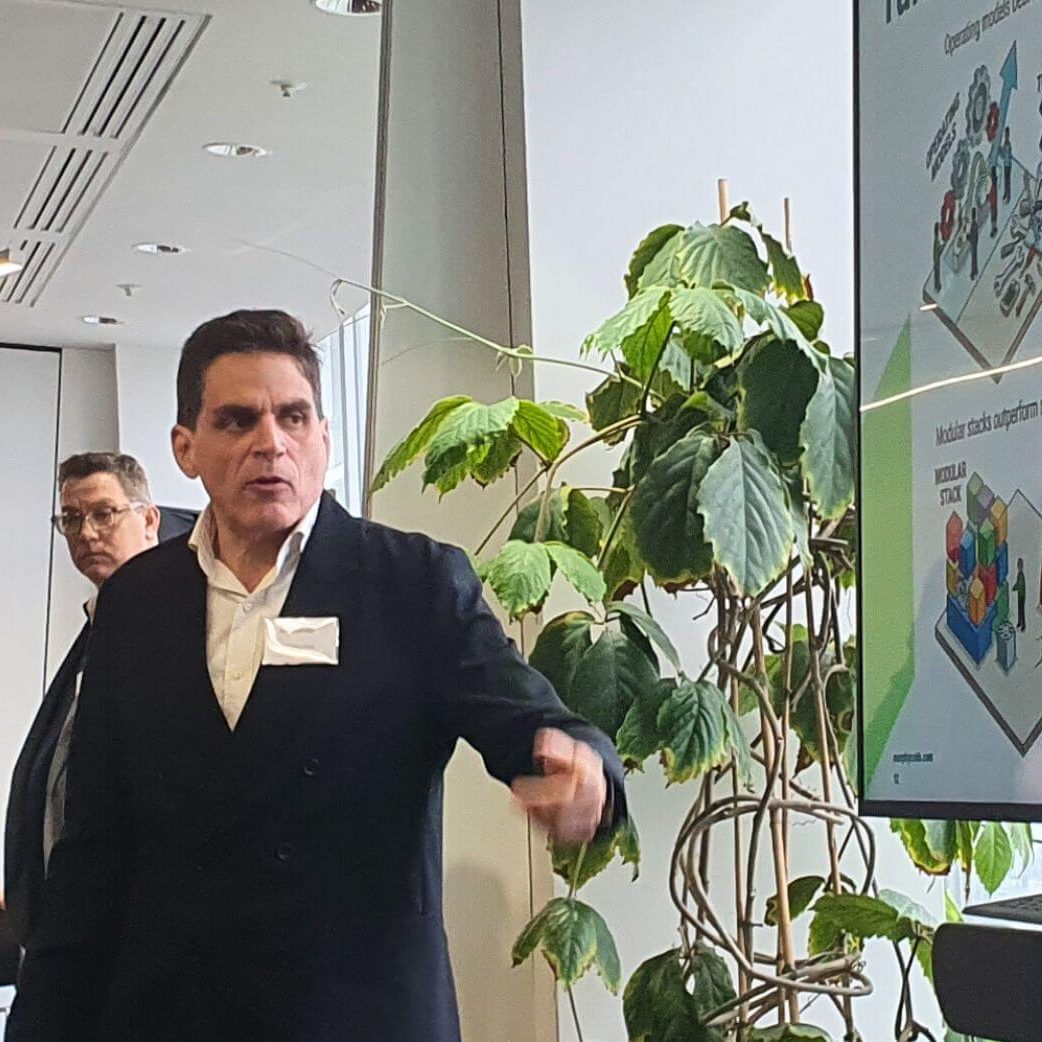
The view from the Shard in London may have been drizzly, but the teams from the MurphyCobb (MCA) and Jellyfish were intent on shining some light on the AI dominated future of production. Clients from brands as diverse as Nomad Foods and Kimberley Clark were assembled to find out how they can make the most of AI to meet their increasingly complex and fragmented production needs without descending into chaos.
The key, according to the speakers at the ‘AI and the New Era of Content & Production’ event, is to understand that getting businesses AI-ready is as much a human challenge as it is a technological one. Brands risk wasting their investments in tech if they don’t address the human elements that lie beneath – such as developing a fluid approach to teams and talent, and an engaged, dynamic approach to governance
“The biggest problem is that AI is kind of sprinkled on top of an old operating system,” said MCA’s Stefan Kerridge. “It’s sprinkled on top of old skills. It’s sprinkled on top of old systems and processes. And it’s not necessarily that that tool has failed, it’s just that it’s been put into a system that doesn’t work.”
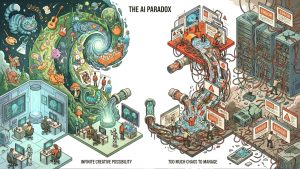
As Sam Yates, chief solutions officer at Jellyfish’s AI Studios noted, we are currently in the “infancy” of AI’s potential. However, shared MCA’s Chico Lima, the excitement of infinite possibility is being met with outdated, rigid organisational structures and that risk being overwhelmed.
“The speed that this is developing is creating too much friction and it will start to break these current systems that are in place, that people have been using that have been built the last 20 years,” said Chico “They’re built for a very different model than what new technologies like AI require. So there’s too much chaos to manage.”
Currently, 95% of AI projects fail to scale. These systems, built on a slow-moving chain of brief, media plan, creative, and production, were designed for a world that moved in months, not minutes. To succeed, AI cannot be an add-on; it must be the central nervous system of a redesigned model.
This shift requires a move from “creative operations” to “creative orchestration.” While operations focuses on the management of tasks and fixed vendors, orchestration is about managing a living ecosystem. The event highlighted a move away from siloed hand-offs, where strategy “passes the baton” to creative which then hands off to production and then localisation, toward “war room” environments. In this new world, data analysts, creative directors, and prompters work in tandem, allowing brands to move at the “speed of culture” rather than the speed of a procurement cycle.
The focus of the event was on the how and what of content production – but as Jellyfish’s Tom Roach pointed out, brands and producers alike also need to understand who will be consuming this content. And in the not too distant future that ‘who’ will be LLMs and AI agents as much as it will be a human audience.
Tom introduced the concept of Share of Model, arguing that LLMs (Large Language Models) are the new gatekeepers of brand equity. With 30% of website clicks being bypassed in favour of AI-generated answers, your brand’s communication is no longer just a message for consumers. If the models don’t “understand” your brand guidelines or can’t click with the content you’re putting out, your brand ceases to exist in the conversational search era. That then means that clients are starting to think about their content not just in terms of how it’s optimised for human audiences but AI audiences. Tom speculates that people will soon start using AI agents to shop for them.
To navigate this, Simon Sikorski and Chico Lima at MCA proposed constructing ‘the Fluid Network’. Unlike the rigid, fixed silos of the past, a fluid network is built on modularity. It requires three pillars: modular technology that can be swapped as better models emerge, bespoke data ownership that stays with the brand, and cross-functional teams that can be spun up or down instantly. This fluidity allows a brand to be “anti-fragile,” gaining strength from market volatility rather than being crushed by it.
Creating this new way of working and organising talent, tech and data isn’t a simple task. To kick off, Simon shared some initial questions for attendees to take back to their own organisations such as, ‘where is data being lost or truncated, where is work being slowed down through multiple hand-offs, and what’s getting in the way of bringing together the right tech and talent at the right time?’
“The future is adaptive fluid and networked,” said Simon. “You need to connect, you need to break silos, bring the right data, the right teams, and the right technology to deliver the messages that you want.”
However, the pursuit of speed must not lead to “AI slop”. Senior AI creative Lucas Stanley and Charlotte Westley, integrated production director, AI, at Jellyfish, defined “slop” as the soulless, unoriginal content that occurs when you’re “doing what you’re already doing, worse, with AI”. And the problem with ‘slop’ is that it leads to audience backlash, and, consequently risk-averse, creatively inhibited clients.
“Bad AI takes a slice of the creative pie,” said Lucas, as Charlotte chimed in, “And good AI makes the creative pie bigger.”
Their solution to avoiding the slop trap is what the Jellyfish team call Real-Time Creative (RTC). Strategists, creatives, producers, prompters collaborate in a “play space” where human craft drives the machine, rather than working sequentially. The case studies presented, from Google Lens’ hyper-local spots to green energy company Gren’s cinematic infrastructure explainers and trailer for astronaut training company (yes, really) Orbit, showed how the team were able to stretch budget and shrink timelines using AI, while the human collaboration at the heart stopped them veering into the uncanny valley.
Bringing everything together, Chico and Matt Eaton from MCA argued that the transition from the phase of ‘AI experimentation’ (in which many organisations are currently stuck), towards being able to leverage AI as a commercial advantage will involve deep change management.
And as the tech continues to accelerate, brands and agencies alike will need to stay on top of governance to ensure that their approaches are ethical, brand safe and best practice. Organisations will need to straddle the need to keep governance up to date while allowing creatives and producers the autonomy to work in this fast, fluid way. Accountability and transparency are key. When building new systems and workflows organisations must ensure that governance is dynamic but that compliance doesn’t become a bottleneck.
Ultimately, the event put forward the argument that readying a business to embrace AI content isn’t just about giving new tech to the production department. Rather, it’s requires a wholesale reimagining. Organisations must be fluid and silos non-existent.
It’s a strategic undertaking that businesses need to approach with a clear sense of purpose. As MCA’s Matt Eaton laid out, the biggest challenge with AI isn’t so much to do with the tools and the tech but the organisational structures, set up and models that form the foundations.
“Start with the “why,” the vision, the strategy for how you’re going to implement AI and production. Look at organisational change, it’s difficult but it needs to be looked at to get the best out of AI. Think about governance, a governance framework that adapts over time. And start to reimagine your operating model.”